
I've spent 25 years solving the problems nobody else wanted to touch.
I started my career writing code. Java, mostly, building enterprise systems at a dot-com era e-business consultancy and at a software and systems engineering firm serving Federal government clientele in the early 2000s. That might seem like an odd starting point for someone who would go on to crack hard-hitting strategic problems at McKinsey, run a $7B+ product commercialization function at Indeed, and integrate a $130M acquisition at Relativity. What it actually did was lay the foundation for everything that came after, because there is no substitute for truly understanding how technology works from the inside when you are leading technology-driven businesses.
Because I understand how technology actually works: not as a metaphor, not as a budget line, but as a discipline. I know what it costs to build something. I know where execution breaks down between the whiteboard and the real world. And I know how to lead teams of smart people toward a goal without losing them in the process.
After completing my M.S. in Management of Information Technology at UVA, I made a deliberate pivot from coding to business, with a focus on strategy, operations, and execution. I pursued dual degrees at Stanford (an MBA from the Graduate School of Business and an M.A. in Education) and then joined McKinsey & Company, where I advised clients on post-merger integration, organizational design, and growth strategy. McKinsey gave me the analytical frameworks. What came after helped me to build scar tissue on the "battlefield" of the corporate world.
At Aon (the $15B global risk and human capital solutions firm), I spent six and a half years tackling mission-critical problems and advising the company's most senior executives across five separate roles of increasing seniority in different parts of the business. From there, I moved into increasingly hands-on leadership roles: redesigning the corporate strategy at a PE-backed firm and helping position it for a successful sale; leading M&A integration for Relativity's two largest acquisitions; and ultimately running a ~150-person product commercialization organization at Indeed, overseeing product and GTM strategy for products representing roughly 95% of a $7B+ business.
What I've learned across all of it: the gap between a good strategy and a great outcome is almost always an execution problem. And execution is intensely human: it's about clarity, alignment, accountability, and leadership that doesn't flinch when things get complicated.
That's where I live. And honestly? It's where I'm happiest.
What I Do
Six areas. One through line.
Strategy and Business Model Design
Developing strategies that are grounded in reality, connected to execution, and built to generate real competitive advantage.
Organizational Transformation
Designing and leading the cross-functional, people-first transformation initiatives that actually move performance, not just org charts.
Go-to-Market Strategy and Execution
Building and running the commercial systems, launch frameworks, and monetization strategies that turn products into revenue.
M&A Integration and Corporate Development
Leading integrations that preserve value, build alignment, and deliver on the deal thesis, from diligence through Day 100 and beyond.
People, Org Design, and Performance
Architecting organizations: the right structure, the right talent, the right accountability systems that perform sustainably.
Technology and Product Operations
Bridging the gap between technical teams and business outcomes, with fluency on both sides of the conversation.
"The hard problems don't need more strategy. They need someone willing to do the work."
— Marquis Parker
Proof of Work
The numbers behind the work.
Education
The academic foundation.
Four degrees from three of the world's most respected universities.
"If you ask me what I'm actually trying to build with all of this, the answer hasn't really changed since I first wrote it on a business school application more than twenty years ago: a life that earns being remembered well. I think about that in three pieces. First, being a good family man, a good friend, and a good person to the people who actually know me. Second, the work itself: taking the opportunities in front of me seriously, doing things that matter, and leaving the organizations I'm part of stronger than I found them. Third, giving back: mentoring, advising, serving on boards, working with nonprofits. The titles and the credentials are real, but they're scaffolding. Those three pieces are the building."
— Marquis Parker
Beyond the Work
Leadership doesn't stop at the office door.
| Princeton Club of Chicago | President (2025–Present) |
| Stanford Haas Center for Public Service | National Advisory Board (2025–Present) |
| Economic Club of Chicago | Member; Science, Technology, and Innovation (2024–Present) |
| Our Kids Read | Executive Board Member (2022–Present) |
| Princeton Club of Chicago | Board Director (2010–Present) |
| Stanford GSB Alumni Association | Board Member (2022–2025) |
| Princeton Prize in Race Relations | National Board Member (2019–2025) |
| McGaw YMCA (Evanston, IL) | Board Member (2019–2024) |
Life Outside the Work
Life outside the work.
Outside of the office, Marquis is a photographer (mostly portraits, travel, and sports). He's a mentor, a startup investor, a community leader, and someone who has spent years on education boards because he genuinely believes in the mission.
He lives in the Chicago metro area with his wife and son.
See more on Instagram @marquis930
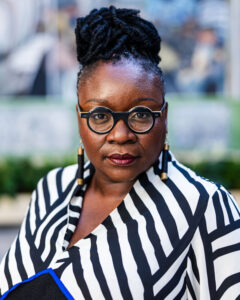



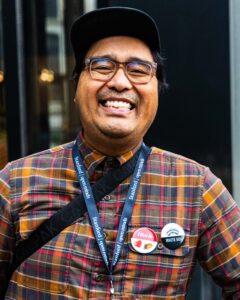

All photos by Marquis Parker · See more on Instagram →
Let's Connect
Want to work together?
Whether you're looking for a keynote speaker, a strategic partner, or a board member, Marquis would love to connect.